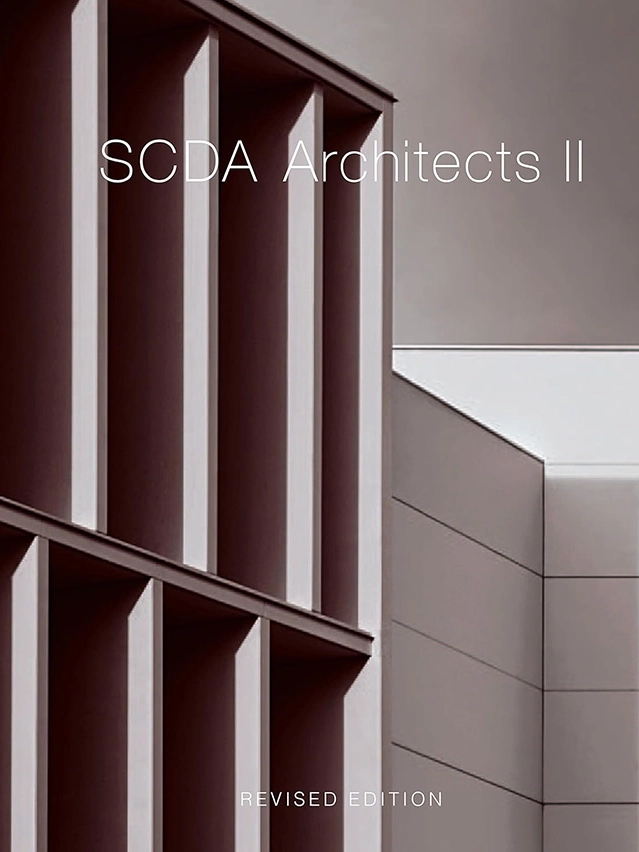
SCDA (2025)
Beyond Boundaries
"Space" is an immeasurable and unfixed term.
Its meaning is impossible to define in a singular manner, yet everyone has a perception of its value. Space is a physical parameter; it captures a volumetric reading. It is, however, also a conceptual notion. In this way, we can see architecture in particular, as both enclosing space and giving an idea of space. Previously a word common only within nhilosonhical discourse. In architecture the term was introduced as part of the development of modernism and its terminology still dominates our lexicon.
In tact, notions of space are the basis of nearly all theories that have shaped the architectural movements of the past century-whether as reactions against or extensions of the snatial propositions of modernism. Space will continue to be a shitting concept that, precisely in its undetined and experimentation.
In the following pages, we’re as interested in space as in the relationships between spaces. To encapsulate as broad an understanding of space as possible, we rely both on more classically rooted terminology that evokes ideas of space, such as procession, order, enclosure, transitions, and more contemporary terms like “spatial plasticity,” a consideration of the relationship of spaces to each other and to the whole.
A space for living is the most fundamental need of people and, by extension, how we live together within units, within buildings, within cities, and within the world must be very carefully considered. Many notable architects in modern history have reimagined the future of residential space. Le Corbusier saw the house as a machine for living, Mies van der Rohe brought in light through precision and assemblage via the development of the curtain wall, and Frank Lloyd Wright strove for an integration of organic architecture and nature. We can learn from each of these precedents—some strategies work and some do not.
Over the years, as SCDA’s projects grew in scope and complexity, we have had similar opportunities to rethink high‑density housing, with projects in different locations, with different climates, and with different budgets to test these ideas. It has urged us to examine the role landscape plays in our designs, as the programmatic components of housing become repetitive and subject to rigid local building codes. The landscape components can organise and define the spatial principle within our design vocabulary.
With projects all over the world, we know that one singular strategy will never make for a successful solution. However, our basic needs are universal. We can rely on the fact that the quality of our spatial environments impacts our health—light and air are required for our wellbeing—and we cannot live in artificial silos; we need to be connected to nature in some way.
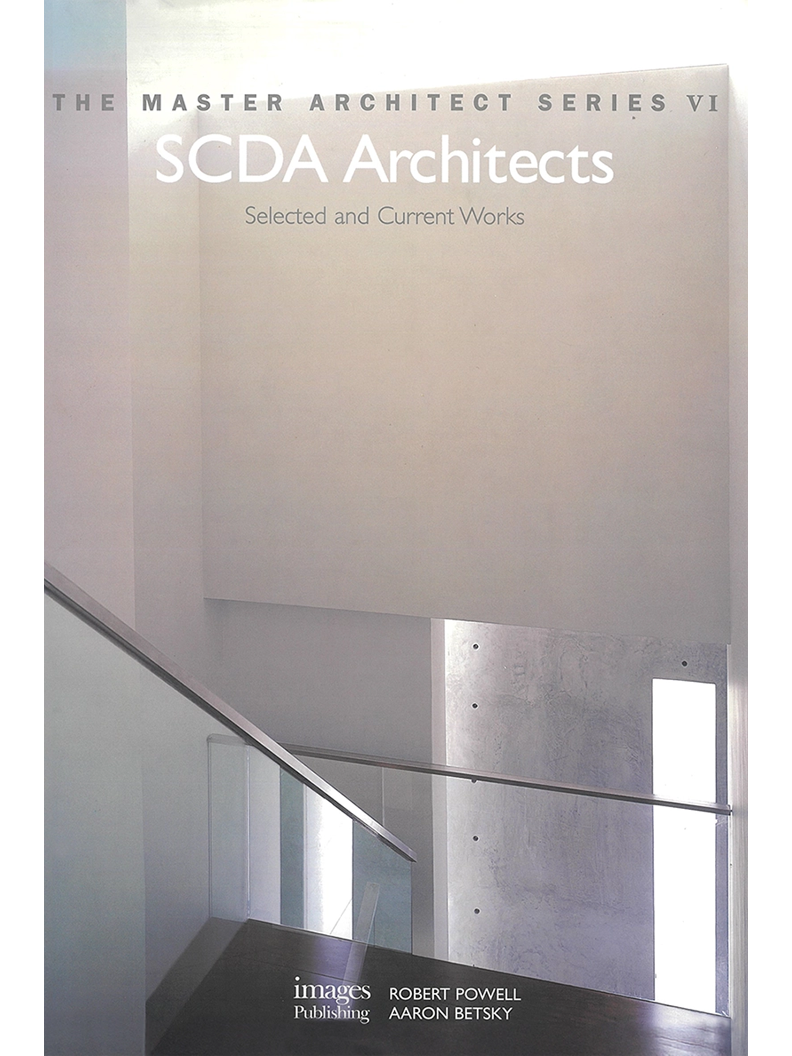
In this monograph, we have gathered projects spanning over 12 years to explore how we design and put buildings together. Assessing one’s own work is often a worthy and illuminating exercise. In past publications, we have felt the luxury of receiving outside perspectives. Aaron Betsky has characterised SCDA’s practice as one suspended between emerging technology and different cultures, while Leon van Schaik has argued for a distancing from these dual realities. He instead suggests a utopian search for perfection: in each work, no matter the context, practice makes perfect.
It is not implausible that the two characterisations could be seen working in unison. While Betsky regards SCDA as a “ruthless and effective scavenger of whatever organisational principles” are deemed appropriate for the situation at hand, van Schaik observes how “messy reality is edited out” in our work; he states that our “idealism drives an architectural toolkit,” comprising “orthogonal relationships between literal and phenomenal transparency of horizontal and vertical planes, the floating of rectangular volumes and tabula rasa recasting of the ground and water planes, and the creation of over‑sailing sky planes.”
Both authors may be right in some way, I suspect. Certainly, SCDA was born as an amalgamation of movements and multiple localities, but it is also a consistent response to the plurality of demands and externalities that pervade commissioned work today.
Having designed single‑family residences and high‑rise towers, cultural institutions and commercial properties, a persistent interest in spatiality becomes clear in the range of work. In fact, as is evident in the following pages, clear traces of the spatial principles we experimented with in early residences can be found in our multi‑unit housing structures.
In examining our projects—completed, on the drawing boards, and those that have remained as sketches and ideas—I would propose that our work is intentionally not about singular definitions. Perhaps this approach is rooted in my education as an architect during an academically “permissive” environment in the 1980s, a moment defined by pluralistic tendencies, when we all found excitement and opportunism in a promiscuity of thought. I have certainly always found labels—especially codifications such as “classicism,” “regionalism,” and “tropicality”—to be more restrictive than liberating. Rather, as van Schaik rightly assessed, we believe in the “architectural toolkit.”
Our work is about building on a spatial vocabulary, a language rooted in space, proportion, material, light, and structure. It is the unifying thread weaving through the many commissions that SCDA has realised, in varying types, forms, and locales. It is a belief in a rule‑based set of principles or kit of parts that can be deployed and composed.
In this book, we seek to explore our individual spatial vocabulary, particularly as it relates to high‑rise residential projects. By extension, we pose a question central to architecture at a larger scale: how can we understand the contemporary fundamentals of high‑density residential architecture? Fundamentals, by definition, are also not singular; they are not exclusively regional or global; not classical or modern. They are never restrictive as they are merely a starting point. Architecture fundamentals must be both timeless and contemporary, stable and evolving. Such fundamentals express a belief in the potential of a universal architecture based on humanity rather than formal expression.
Finding Common Ground
Julia van den Hout
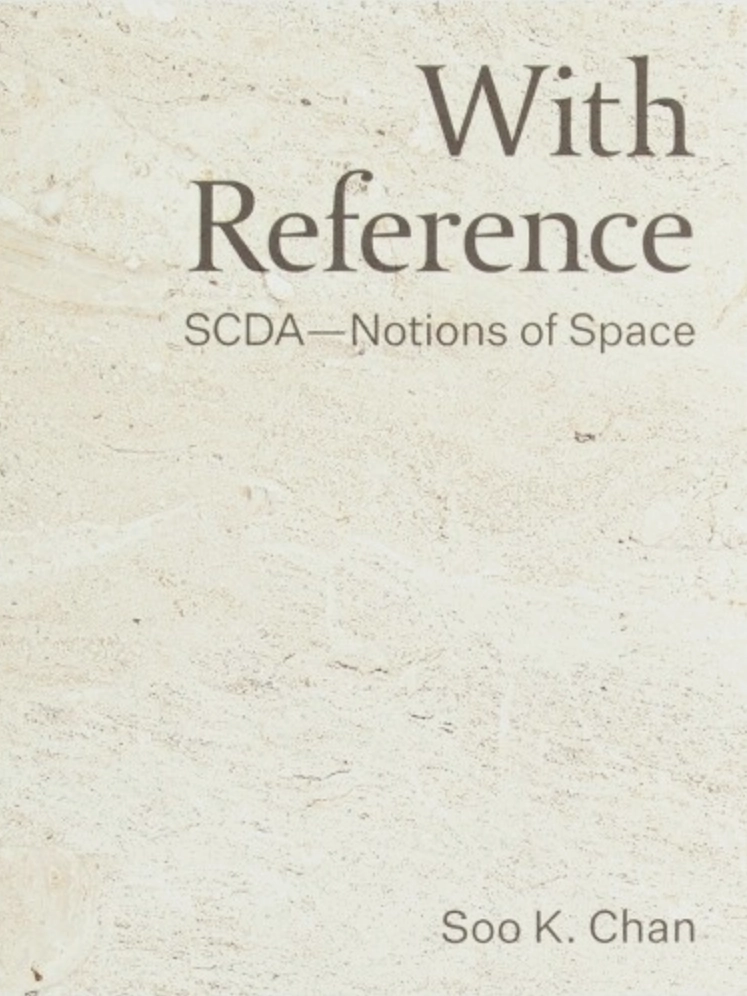
Several years ago, when Soo K Chan and I first sat down to discuss his monograph, With Reference, our conversation delved into the realm of spatial ideals. In his search for a lexicon that could effectively encapsulate his dual fascination with classical clarity and contemporary urbanism, Chan sought to reconcile notions of contextual sensitivity and universality. Through this dialogue, he distilled his thinking into 10 spatial concepts, definable points that attempted to establish an “architectural toolkit,” or what one might deem SCDA’s spatial manifesto.
Chan wholeheartedly embraces the power of universality. His spatial concepts may not be contextually driven in a more traditional geographic sense, but they are far from generic and anonymous. Rather, for Chan, universality is grounded in the human experience, something we all share regardless of location. A sensitivity to the effect that our designed environment has on us—whether we’re in the middle of a city or in a secluded luxury resort, in Singapore or in New York—is a thread that runs through his body of work. It is why he can design a multi-tower, mixed-use complex and a structure as small as the Bali Tenda with equal resolve.
With an oeuvre of monumental high-rise towers, we can talk at length about how Chan tackles the spatial experience in built form. We might scrutinize the towers’ meticulously orchestrated sectional arrangements as they establish impressive skylines; or we could delve into the deliberate selection of interior materials, each one chosen for its capacity to evoke a sense of depth and spanning a range of textures, patterns, and qualities of light. Or we can examine how his spatial language translates from location to location, as he builds in varying climatic conditions.
All of these explorations celebrate Chan’s extensive portfolio of built work, but they overlook the connective fabric that weaves his works together. Before we experience the building, we pass through the site. SCDA’s landscapes are the appetizer to the main, the amuse-bouche that opens our palate, or in this case, whets our appetite to explore in space.
Diving in from the aerial perspectives of soaring volumes, we uncover the intricate mastery of the figure-ground relationships that underpin Chan’s architectural narratives. His lexicon transcends formalism, delving into the interplay between built volumes and their surrounding landscapes. It is within this liminal realm that the compositions come to life, resonating with a deep understanding of rhythm, symmetry, sequence, and space.
Many of SCDA’s larger, urban works rise from a blank site, and in some instances, they have little existing context to consider. Instead, they have the ability to shape what is still to come. They shape internal environments, distilling experience to amplify their effects, with a potential to radiate outward.
Chan’s approach to site planning can be read in both plan and section.
In plan, he relies as much on classical visions as their intentional disruption. Here, lines inscribe a score of movement, charting paths for both physical circulation and perceptual engagement. Chan integrates axiality, linearity, and precision yet infuses his landscape with a rebellious flair. The moments of departure from convention create a palpable spatial tension that heightens the interaction between the landscape and the towering high-rise structures that punctuate it. In this dialogue, Chan orchestrates a dynamic relationship between the horizontal and the vertical, where traditional motifs converge with a deliberate resistance to convention to produce a visually arresting and intellectually stimulating landscape. It’s within this dual realm of innovation and homage that the designs captivate, inviting us to reconsider our ideals of space and tradition in the contemporary built environment, and where they have the potential to expand beyond a single site to impact a much larger area—perhaps even a part of a city.
In Mattel Shenzhen, shards of shifting ground planes seem to have pushed their way through a close-knit cluster of three towers, forcing the buildings to the edge of the site. Were the towers once a single volume? Would they collapse back into one if the green was taken away? While the landscape has a powerful energy in this constricted urban composition, even demanding center stage, it also relieves an inward compression. The tight spaces that appear between towers create intimate landscape moments that are punctuated by water, disrupting the purity of form and lending it an uncontrollable organic character. The water serves not only as a tranquil element but also as a reflective surface, mirroring the towers and the surrounding landscape. In this, Chan’s focus on the ground experience reinforces the idea that architecture is not merely about creating structures but about crafting experiences.
Small groupings of high-rise towers scatter across the urban site in La Cadiere Lake City. The angled positions of the buildings and the meandering lines of the interior roads break any recognizable grid. Their dispersed arrangement around the central Yixin Lake suggests an organized chaos. The low-rise art center tightly embraces the perfectly curved water’s edge. The master plan centers on a spatial rather than a programmatic narrative. It is at once soft and angular, sprawling and intimate, with a designed ground plane that outshines the design of the vertical structures. Each residential high-rise is set within its own landscaped footprint with tiered gardens and accented with water elements. This is the scene of urban engagement, a nature-forward micro-city designed within the larger fabric of Chengdu, China’s fourth-most populous metropolis.
Whereas compositional stamina shines in Chan’s planimetric design, in section, his compositions take on a participatory dimension. Rather than imposing a rigid spatial prescription, he invites moments of improvisation, encouraging occupants to (re)interpret and engage with space freely. We can recognize the echoes of a derived ethos toward urban exploration, envisioning scenes where inhabitants wander through these landscaped realms, guided by their instincts toward carefully designed attractions—a planted courtyard here, a water feature there.
Geometric precision, an unwavering thread woven throughout every facet of SCDA’s designs, serves as the robust framework that accommodates the playful exploration of sectional variations. The deliberate orchestration of shifting ground planes introduces a dynamism and purposeful departure that breathes vitality into the landscapes, fostering an organic and layered experiential narrative that provokes an emotional response.
This is perhaps best seen in one of Chan’s now “classic” high-rise projects, SkyTerrace@Dawson. Here, spatial tensions are elevated by the direct interplay between the towers’ monolithic form and their green site. The landscape travels up the buildings, suggesting that it’s only a matter of time before it is overgrown completely.
In these larger scale projects, where the compositional tensions are amplified, buildings don’t stand as individual units but form a collective, an arrangement filled with deliberate areas of friction, followed by a sudden moment of release. Chan’s constellations of volumes and voids start to indicate a larger narrative aim, a step toward urbanistic thinking. He embraces the city’s sometimes-messy realities while aiming to shape a calm antidote. As the projects continue to grow in complexity and scale, we may see Chan beginning to impact the city beyond the confines of his sites.
Yet even in the projects of much smaller scale, those that are sited on secluded beaches far outside an urban center, or single-family structures, Chan’s drive to evoke a natural spatial experience is a guiding ambition. In Sanya Edition, we see Chan bring this approach to a hotel complex. Like in SkyTerrace@Dawson, the connection between ground and figure is deeply intertwined. Here, it has a greater formal character, defining a more linear promenade architecturale, but the terraced terrain shapes a sectional dynamism and new topography for the site. It fosters a sense of intimacy and connection with the surroundings, while serving the profitable purpose of optimising views for as many units as possible. We can only imagine that the landscape will grow wilder over time, softening the hard edges of the built elements it surrounds.
In this, the work extends beyond the shaping of distinct geometric volumes and the soaring verticality of towers. Chan embraces the ground plane as an integral facet of spatial experience. His buildings rise with a certain silence. The structures reflect the surrounding environment back to us, heightening our awareness of our own scale within our nature. Luckily, Chan doesn’t ask us to choose between building and landscape, a single-family house and a large multi-tower master plan. This is all part of a spatial formula, a vision for how we achieve balance between multiple dynamics, and how we move toward the notion of universality. It has allowed Chan to build a multidisciplinary practice where all projects are considered holistic experiences.
As we contemplate our impact through built work, Chan remains grounded in his belief that architecture is fundamentally about crafting experiences. His work serves as a reminder that, ultimately, it’s the movement of our body in space that shapes our experience and builds our surroundings.
SCDA: Under the Skin
Leon van Schaik
In my foreword to SCDA Architects II, published in 2013, I argued that the practice occupied the idealist corner in the tripolar world of architecture, a realm in which a realist position and a populist held the other corners. Listening to Soo Chan in conversation with Suzy Annetta today I was struck by what he recalled from his childhood in a Penang family complex of shophouses around a temple. He spoke of the sound of rain in a tropical downpour hitting granite. I heard him speak of aural and tactile effects, not of the motifs or the decorative elements of an architectural tradition. And when he spoke with passion about his undergraduate education at Washington University, it was of his induction into a Bauhaus basic course in which immersion into materials and their qualities was of prime importance. His anecdote about carrying in his knapsack, all week, a 6 × 6-inch cube of Douglas pine, into which he was instructed (by Leslie Laskey) to carve out an essence of this timber-ness, this impression was reinforced.
He mentions a stellar cast of male architects who stalked his time there and later while he did his masters at Yale and talks of the myriads of -isms that permeated architecture in the 1980s. There is a gripping anecdote about him making a presentation in a studio set by Bob Stern and critted [critiqued] by Philip Johnson. He avoided the task at hand—learning from history—and presented a characteristically Soo Khian design. This was met with utter silence. “What have you learned from?”, came a closing question. Like water off the back of a duck, these inquiries did not deter him, as he adhered to his search for the prime qualities of space and material. From these luminaries he did, however, learn that the stories that we tell have carriage of our positions in the architectural firmament. To this day, he enjoys the camaraderie of talk at table, lubricated with “good wine.” To those who accuse him of not being “post-colonial,” he argues that we are all in the architectural realm together, that we belong to a global culture. The important thing is not to kowtow to the fads and fashions of the -isms, but to seek resolutions particular to the places in which we work.
SCDA has worked in 70 places! He takes the same approach to the greening of architecture: do it but don’t virtue signal it. A new project consists of pods that contain everything that you could need to camp off-grid, all unpacked and assembled on national park trails. He talks of going back in the early 1990s to his roots in Asia, convinced that architecture is underpinned by a syntax, a set of rules, safety rails… amongst which he mentions figure-ground. Did he encounter Colin Rowe, the guru of this method, I wonder? Certainly, his designs, even in the early years of his practice, display an intensely worked craftsmanship in the alternating of spaces and solids. He talks of becoming intensely aware of the hierarchies of circulation in eastern palaces, the Forbidden City, for example. And you can see what he means when you look at the planning of the resorts. In the resorts too, his respect for the ephemerality of Japanese traditional architecture is observable.
The besetting sin of modernist education lay in the idea of “originality.” Soo Khian’s 1980s mentors aimed to correct that by going into history. I have become interested in two models for relating to the history of a discipline, now that we all accept that we cannot slough off our histories. One, adopted by the post-modernists, is to internalize the past as an ideal model and attempt to replicate it in new conditions. The other is to treat the past as a commons across which trails can be ventured. You might expect me to place Soo Khian in the first camp, since I have previously identified him as an idealist. But I do not. To me, it is the pathway that Soo Khian has steadfastly developed and persevered, and with that puts him in the second category—that of those who seek out the processes, the underlying syntaxes, and work with those rather than with their entirely contingent manifestations in other peoples’ work.
Soo Khian was—maybe is still—a creature of the globalized world: happy at a moment’s notice to leap onto a flight to New York. Yet he talks of the way in which the pandemic that began in 2019 has been used in cities around the world to create huge improvements to how we live in cities. Pavements have been enlarged into social spaces, alternative modes of transport have been encouraged, and social distancing has civilized airports—places that had become frenetically horrid. Small steps, but achievable and with measurable impacts on our general well-being. Maybe this slow change to our urban pathways (which can be well or badly implemented) informs his view, which I strongly agree with, that architects—while they can help others where there is a political will—cannot, by themselves, save the world.
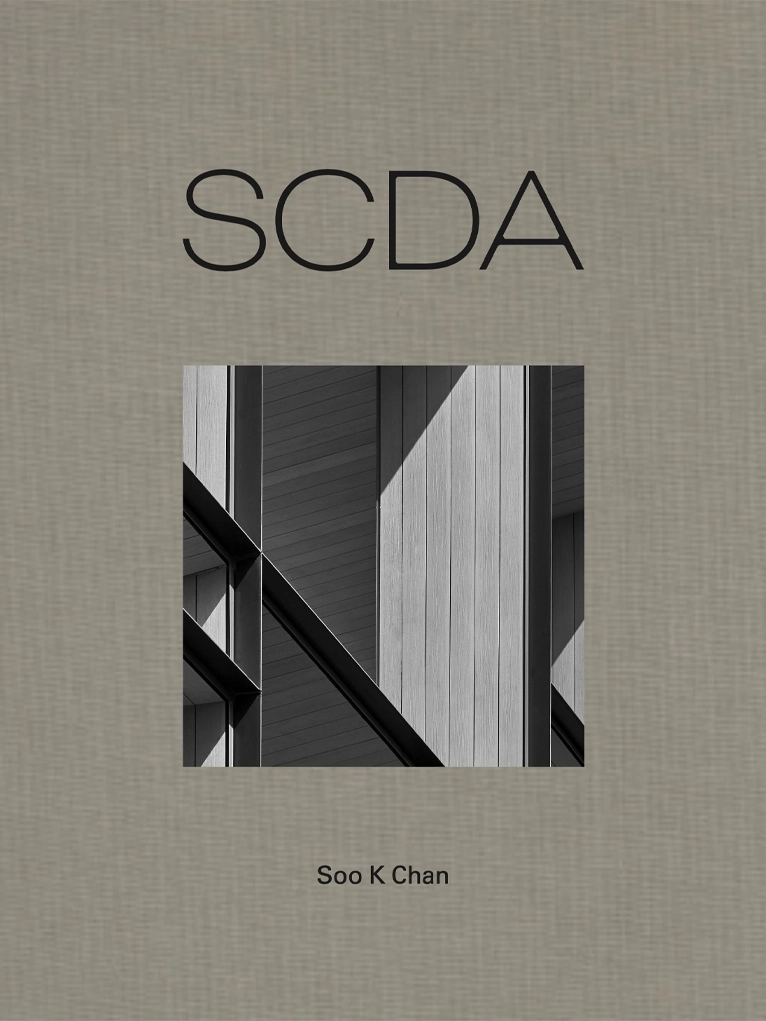
SCDA (2025)
SCDA (2025)
"Space" is an immeasurable and unfixed term.
Its meaning is impossible to define in a singular manner, yet everyone has a perception of its value. Space is a physical parameter; it captures a volumetric reading. It is, however, also a conceptual notion. In this way, we can see architecture in particular, as both enclosing space and giving an idea of space. Previously a word common only within nhilosonhical discourse. In architecture the term was introduced as part of the development of modernism and its terminology still dominates our lexicon.
In tact, notions of space are the basis of nearly all theories that have shaped the architectural movements of the past century-whether as reactions against or extensions of the snatial propositions of modernism. Space will continue to be a shitting concept that, precisely in its undetined and experimentation.