These spaces acted as outdoor rooms where Khoo clan members would often congregate, enjoying their cooling, tempered atmosphere. Hardscape, softscape, and architecture came together to create and define a unified whole with its own identity and a strong sense of place. Moreover, these outdoor areas carried the function of transitional, “in-between” spaces that would act as a threshold between the street’s public and the home’s private realms.
The idea of creating outdoor rooms as extensions of the home’s interiors has been developed to become one of SCDA’s main preoccupations. Following the inherent flow of space, hardscape and softscape are layered and arranged to form outdoor living areas. Proportion, materiality, and detail define serene, enduring environments that enhance the negative spaces within or between buildings. Often, the sensory experience of water is inserted as a contemporary landscape element to structure space, define hierarchy, and strengthen the sense of place. Just as with an interior, furniture, artworks, and lighting are considered early at the conceptual stage and play an important role in the formation of the overall landscaped approach.
In densely populated cities, the creation of outdoor spaces is vital but also challenging, requiring creative solutions. When designing high-rise towers, we carve out the architectural shape to vertically integrate a variety of green spaces, such as terraced landscape elements, sky gardens, vertical green walls, sky pools, and water features.
In earlier projects, such as Dua Residency (2002), the design includes a sky garden on its 15th floor, complete with a jogging track, gym, landscaping, and a café. At Boulevard (2004), two open-air terraces on the 13th and 24th floors feature a number of activities and offer magnificent views of the Singapore skyline.
Later developments see outdoor spaces further integrated into their design, modifying their shapes and becoming striking visual features. At TwentyOne Angullia Park (2008), impressive six-storey-high openings inserted within the building’s mass give the tower its unmistakable shape and allow sunshine and rain to permeate the sky terraces, giving a true sense of the outdoors. SkyTerrace @ Dawson (2006) integrates the landscape of an adjoining park by virtually extending its greenery upward toward a linear sky garden situated on the roof of the four-storey podium car park. This is achieved by covering the car park’s façade with terraced planters of cascading climbers, creating an arresting visual effect. The development’s sky gardens link its three towers, providing diverse active and passive recreational spaces.
Besides providing outdoor landscaped areas for public use, many SCDA designs also feature ample “private landscapes”—terraces, gardens, and pools—within individual units. Projects such as The Marq (2006) or Leedon Residence (2012) feature private swimming pools and generous decks in many units, creating a sense of “landed” living. The most significant expression of this idea can be seen at OneKL (2004), where 94 swimming pools are built above ground. This kind of stacking is the result of envisioning living units as a series of interlocking volumes. Its realization requires some technical prowess, which is only possible if it is integrated into the concept at a very early stage. At OneKL, for example, the pools had to be placed over two-storey spaces in order to accommodate the associated structural and mechanical elements.
The inclusion of individual outdoor spaces in the form of sky gardens, large balconies, terraces, or pools is in line with the concept of creating significant “in-between” or transitional spaces between indoors and outdoors in low-rise buildings. In my view, these are the most comfortable spaces to be in—a semi-public zone within the privacy of your personal space from which to experience public life.
This concept of outdoor space is not limited to buildings in the subtropics with milder climates.
I have tested this idea at Soori High Line in New York, where 16 pools are inserted into a mid-block building with typical New York zoning. Instead of winterizing the pools, they are kept exposed to the elements, bringing light and air to the depths of the building. The water from the pools goes through a heat pump from the boiler, which keeps the temperature at a comfortable 29°C (84°F).
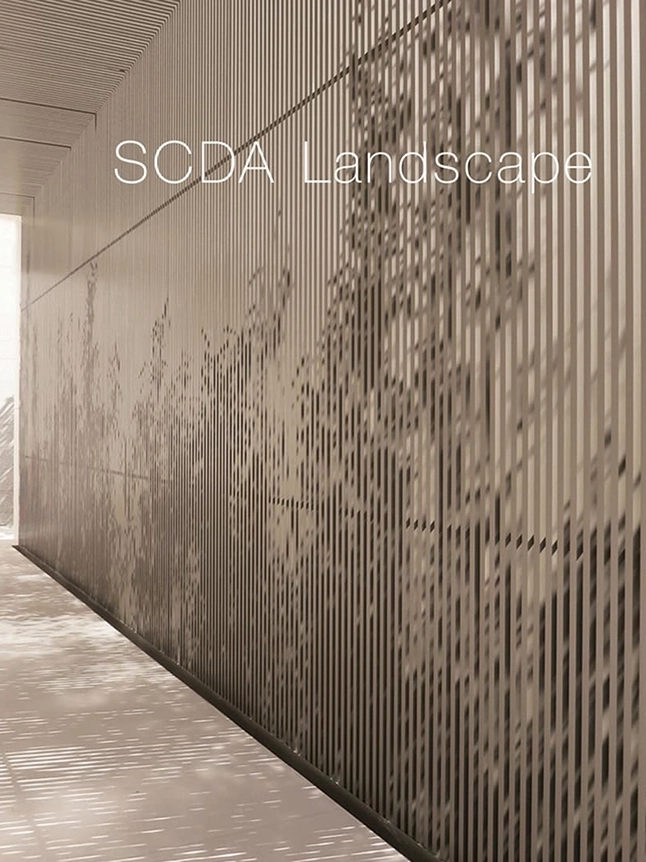
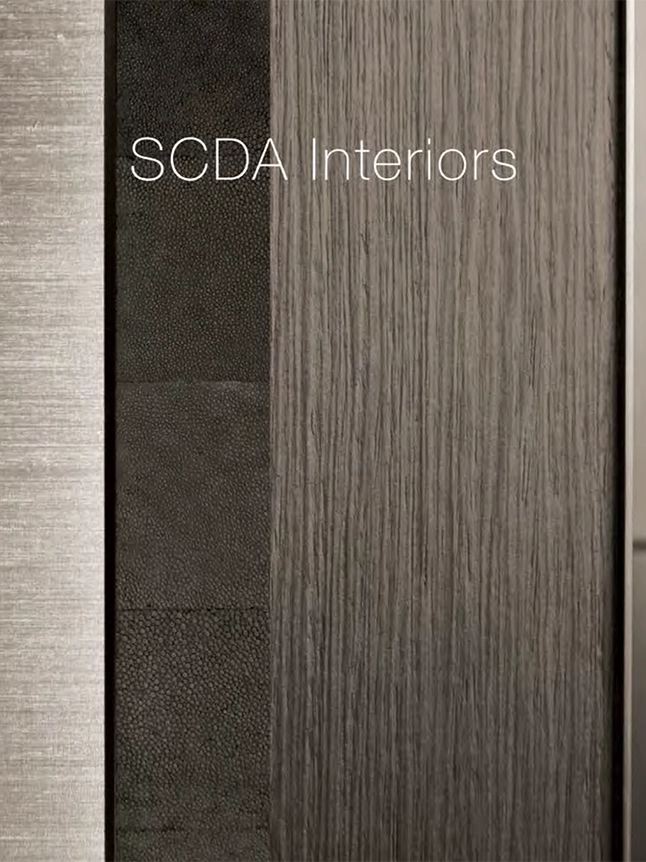
Today, most of SCDA’s works include both landscape and interior design in addition to the architectural scope. SCDA’s landscape design team comprises architects, landscape architects, and horticulturists who provide softscape expertise. The interiors branch of SCDA works hand-in-hand with landscape, advising on the selection of outdoor furniture, artworks, and accessories, thus helping to create a seamless transition from the interior to the exterior. It is this highly collaborative process that permits the SCDA team to deliver well-integrated, highly detailed, and thoroughly executed projects that have become its trademark over the years.